



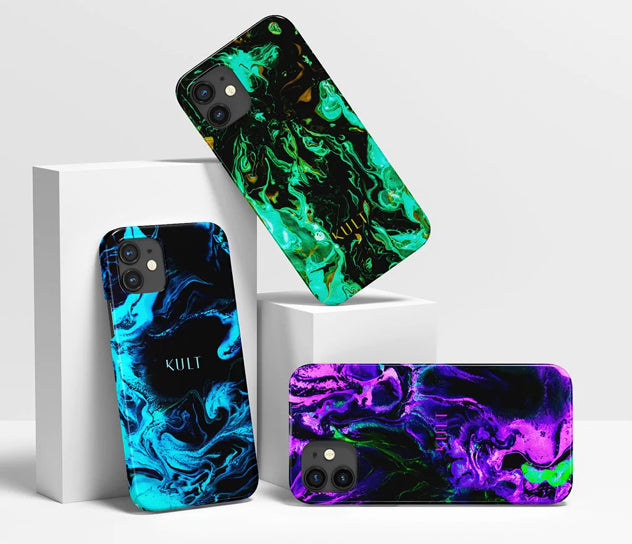


Your phone is already part of the outfit. It is in your mirror selfies, on the coffee table, tucked under your arm at brunch, and probably color-coordinated with your headphones. This guide to phone case materials helps you choose a case that does more than prevent scratches - it needs to look like it belongs in your life.
The right material affects the feel in your hand, the way a print looks, how much protection you get, and whether your case stays cute after months of daily use. There is no single best option for everyone. A glossy cosmic print has different needs than a minimalist clear case, and someone who drops their phone on concrete needs more than someone whose phone mostly lives in a tote bag.
The guide to phone case materials, by feel and function
Most fashion-forward cases are made with one material or a mix of materials. That is a good thing. Layered construction can pair a hard outer shell with a shock-absorbing interior, giving you more impact protection without turning your phone into a bulky brick.
Here is what each common material brings to the table.
TPU: flexible, grippy, and made for everyday life
TPU, short for thermoplastic polyurethane, is one of the most popular phone case materials for a reason. It is flexible enough to snap on easily, but it has more structure and durability than soft rubber. It also tends to have a comfortable grip, which matters when you are juggling an iced coffee, keys, and your phone at once.
TPU handles everyday bumps well and works especially nicely around raised edges and reinforced corners. It is often used as the inner layer of protective cases because it can help absorb impact. For style, it is a great base for vivid artwork, translucent color, and clean modern finishes.
The trade-off? Clear TPU may yellow over time, especially with sun exposure, heat, and frequent contact with lotions or makeup. If you love a transparent look, regular cleaning and keeping it out of direct heat can help it stay fresher longer.
Polycarbonate: crisp prints and a polished finish
Polycarbonate, often called PC, is a hard plastic known for its strength and shape retention. It gives cases that sleek, fitted silhouette and creates a smooth surface where high-impact artwork can really pop. Think sharp florals, neon graphics, checkerboard patterns, and photo-style custom designs with serious visual payoff.
Because polycarbonate is rigid, it does not have the same bend as TPU. On its own, it may not absorb impact as effectively as a softer material. That is why the best protective designs often use a polycarbonate outer shell over a TPU bumper. You get the polished, print-ready exterior plus a more forgiving layer where drops happen.
Choose a PC-forward case when your priority is a refined finish and bold design detail. It is ideal for anyone who wants their phone case to read more like an accessory than an afterthought.
Silicone: soft-touch and effortlessly wearable
Silicone cases have a velvety, soft-touch feel that makes a phone instantly more comfortable to hold. The material has natural grip, a slightly cushioned feel, and a clean matte look that works beautifully with solid colors. If your aesthetic leans tonal, pastel, bright, or minimalist, silicone has major appeal.
It can offer decent protection against small drops and scratches, but quality matters. Lower-quality silicone can attract lint, stretch around the edges, or feel less secure over time. A well-made silicone case with a snug fit and a soft lining gives you a more premium experience.
Silicone is less about showing off intricate print detail and more about creating a color moment. It is the phone-case equivalent of a great neutral handbag or the perfect cherry-red lip: simple, but never invisible.
Leather and vegan leather: elevated texture, less carefree energy
Leather cases bring a more classic, polished vibe. They develop character with use, and many people love the way real leather gains a softer, lived-in patina over time. It is a strong choice for a work-ready look, a quieter luxury mood, or a gift that feels a little more special.
Vegan leather offers a similar textured finish without using animal hide. Its performance varies by construction, but it can be an appealing option when you want that elevated appearance in a more accessible format.
Neither material is the best pick for messy, high-impact routines. Leather can stain, darken, or show wear when exposed to water, oils, and repeated drops. If your days involve gym bags, beach trips, or a phone that regularly meets the sidewalk, a hybrid case may be the smarter style move.
Clear plastic: show the phone, but know the upkeep
Clear cases are classics because they let your phone color take center stage. They also work when you want to add personality without covering every inch of the device - think glitter accents, colorful bumpers, or a clean clear canvas for a custom insert.
Clear cases can be made from TPU, polycarbonate, acrylic-like materials, or a combination of those. Hard clear shells tend to look especially crisp, while flexible clear TPU is easier to put on and take off. The main consideration is yellowing. Some yellowing is simply part of how clear polymers age, particularly in transparent flexible materials.
If you are committed to the clear look, wipe your case down regularly with mild soap and water, dry it fully, and skip harsh cleaners. A clear case can stay chic, but it is not a set-it-and-forget-it accessory.
Why hybrid materials are often the smartest choice
When protection matters as much as the print, hybrid cases are hard to beat. These designs usually combine a rigid polycarbonate back with flexible TPU around the edges and corners. Each material does the job it is best at: the hard shell protects the design and maintains shape, while the softer bumper helps manage impact.
This construction also gives designers more room to play. A glossy graphic back can sit alongside a translucent sidewall. A bold pattern can stay sharp while raised edges help protect the screen and camera lenses from direct contact with tables, counters, and other daily hazards.
For most people, a hybrid case is the sweet spot. It delivers the confidence of everyday protection without sacrificing the fashion energy that made you want a new case in the first place.
Match the material to your actual routine
Be honest about how you use your phone. If you are always on the move, commute often, or have a history of cracked corners, prioritize shock absorption, raised bezels, and reinforced edges. TPU or a TPU-PC hybrid gives you a better safety net than a thin hard shell alone.
If you change your case with your outfits, seasons, or mood boards, focus on materials that make color and artwork look their best. Polycarbonate-backed and hybrid cases are especially strong choices for eye-catching prints. They preserve bold detail, whether you are into electric florals, dreamy cosmic swirls, or a Kustom design that is completely your own.
If you love a slim profile, consider a hard-shell case, but do not assume slim means fragile. A thoughtfully designed thin case can still offer useful scratch protection and raised edges. It simply will not provide the same drop protection as a thicker, cushioned construction.
A few details that matter beyond material
Material is the starting point, not the whole story. Check that the case has a precise fit for your specific phone model, responsive button covers, cutouts that do not block charging, and a raised lip around the camera. A beautiful case that slides around or makes the buttons hard to press will not earn a permanent spot in your rotation.
Finish matters, too. Matte textures hide fingerprints better, while glossy finishes make colors look richer and more saturated. Textured or soft-touch sides can improve grip. If wireless charging is part of your routine, look for a case designed to support it, especially if you use magnetic charging accessories.
Your case does not need to be boring to be protective, and it does not need to look heavy-duty to work hard. Choose the material that fits your real life, then pick the color, pattern, or custom design that makes you want to show it off every time you reach for your phone.


